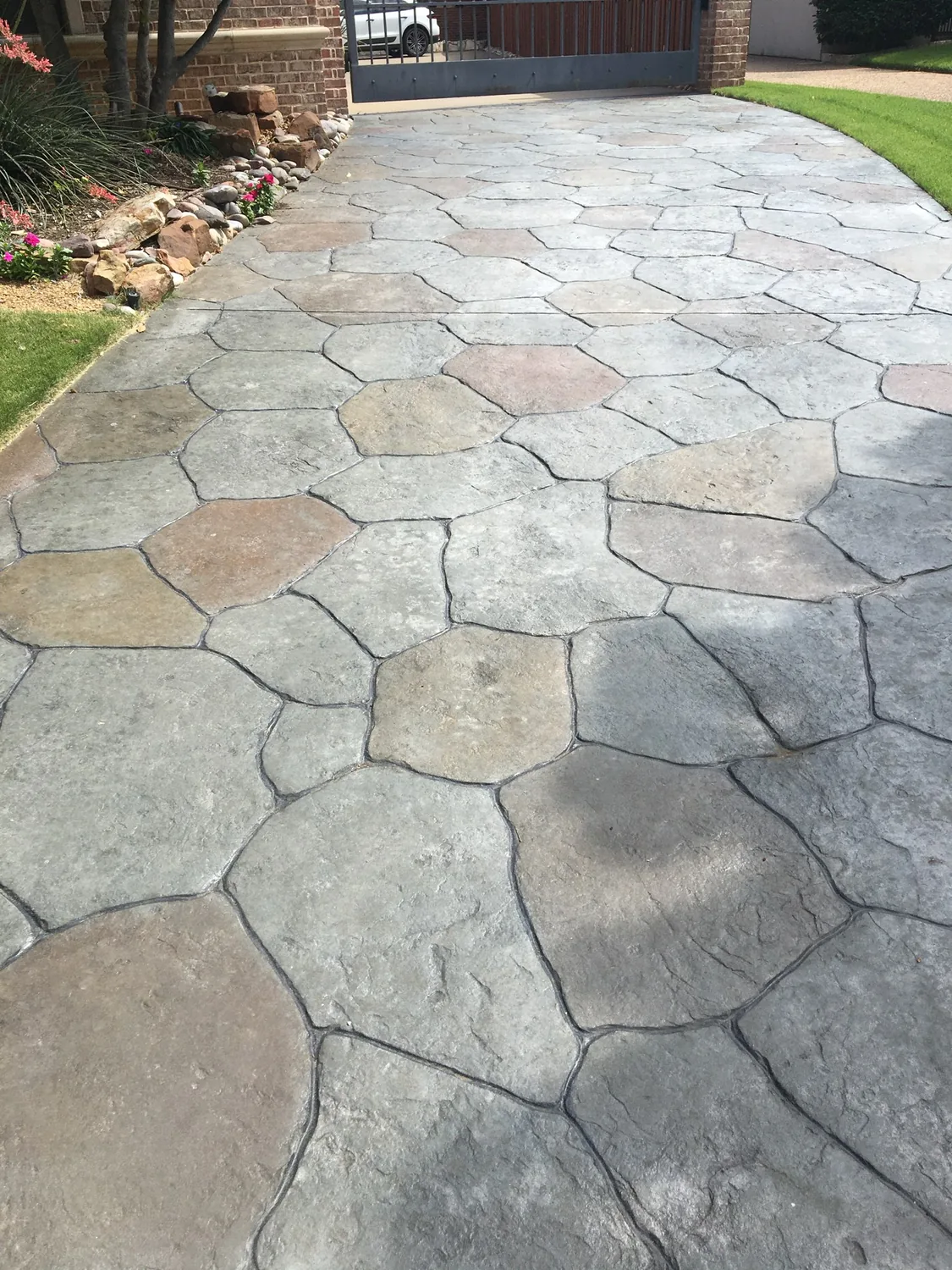
What is stamped concrete?
Stamped concrete is a single poured slab that gets pressed with patterned mats while the mix is still soft, then colored to mimic stone, brick, or slate. The result reads like a paver field but pours as one unbroken surface, so there are no seams to grow weeds or wander apart.
How much does stamped concrete cost in Atlanta?
Decorative work sits above plain flatwork on price, and the structure beneath it still demands a graded red-clay base with a steel rebar grid tied through. Stamped concrete generally opens around $14 to $22 per square foot, shaped by pattern detail, the number of colors, and the sealing. A walk-through of the space settles the figure.
How does stamped concrete hold up on Georgia clay?
The base is built like any slab here: graded, compacted, steel-reinforced, and jointed for red-clay movement. The surface is the part that needs tending, since the Southern sun lifts the color out, so we reseal on a cycle. Pavers, by contrast, tend to settle and go uneven as the clay shifts and roots travel beneath them.
What patterns and colors can I get?
Stone, slate, brick, and plank textures in earth tones that suit metro Atlanta homes. We bring samples and tune the look to your house and whatever hardscape you already have.
How often does stamped concrete need resealing in Atlanta?
Plan on a reseal roughly every couple of years, and move that up on the south- and west-facing spots that catch the longest hours of sun. You leave with a written upkeep schedule so the color keeps its depth season to season.
Is stamped concrete slippery when it rains?
A stamped surface can come out smoother underfoot than a broomed one, so anywhere it sees foot traffic in the wet, like walkways and pool surrounds, we work a non-slip additive into the sealer. We will point out exactly which stretches of your layout need it.
How does the cost compare to pavers?
Stamped concrete usually goes in for less than pavers, has no joints to weed, and won't rut and separate the way pavers can as red clay moves and roots push beneath them, though it does want periodic resealing for the sun. We will set the trade-offs side by side so the choice is clear.